Mindfulness for Life Transitions
A gentle, practical guide to mindfulness
Mindfulness for Life Transitions for women in midlife. Learn simple, everyday ways to feel calmer, clearer, and more grounded—without pressure or perfection.
Mindfulness for Life Transitions
There comes a stage in life when the noise quietens—but not always in a comforting way.
Perhaps the children have grown and left home. Perhaps your working life feels different now, or your body no longer behaves in ways you once took for granted. Perhaps you’ve done everything you were supposed to do, and yet you find yourself asking a quiet, unsettling question:
“Is this all there is?”
Mindfulness is often presented as a solution—but usually in ways that feel unrealistic or mismatched to real life. Long meditations. Perfect routines. Empty platitudes about gratitude and positivity.
That’s not what this page is about.
Here, mindfulness is something gentler. Slower. More forgiving. It’s not about fixing yourself—it’s about coming back to yourself.
Below are ten simple, life-friendly ways to practise mindfulness, especially suited to women in their 40s, 50s, and beyond—women who carry history, responsibility, wisdom, and a deep need for steadiness..
Mindfulness Is Not About Escaping Life

Before we begin, it’s important to say this clearly:
You do not need to become a different person to be mindful.
You do not need to empty your mind or sit cross-legged in silence.
And you do not need to add another “thing” to your to-do list.
Mindfulness is simply the practice of being present—in your body, your thoughts, and your everyday moments—without judgement.
And it can begin exactly where you are.
Mindfulness for life transitions isn’t just a personal development trend—it’s also an area of growing scientific interest. Research has shown that regular mindfulness practice can reduce stress, improve emotional regulation, and support overall wellbeing, particularly during periods of change.
For a clear, research-based overview of how mindfulness affects the brain and body, Harvard Health Publishing offers an accessible introduction grounded in clinical studies rather than hype.
Positive Thinking For Women
If you’re finding that mindfulness is helping you slow down, you may also notice how harsh your inner dialogue has become over the years—especially during times of change. Many women discover that learning to be present is only part of the picture; learning to speak to themselves more kindly matters just as much.
You might find it helpful to explore - "Positive Thinking for Women in Midlife." A free, practical guide that looks honestly at how mindset really works during life transitions—without pressure, fluff, or unrealistic expectations.
Click Here... To Find Out More
1. Do One Thing at a Time
Many women reach midlife exhausted not because they are doing too little—but because they are doing too much at once.
Multitasking feels efficient, yet it constantly pulls your attention in different directions. Over time, this creates tension, mental fatigue, and a sense of never quite being “here”.
Try this instead:
- Drink your tea without scrolling
- Cook without rushing
- Listen without planning your reply
2. Return to Something You Love
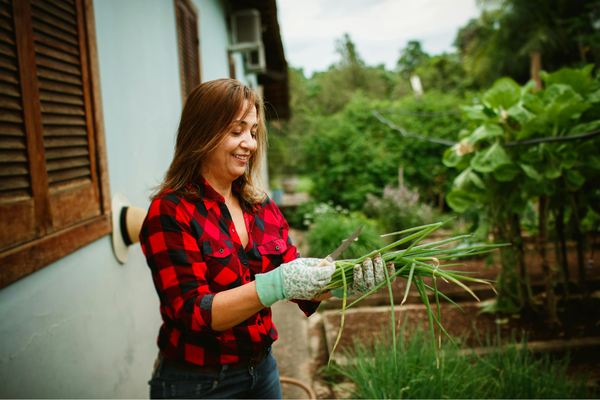
Mindfulness doesn’t always arrive through stillness. Often, it arrives through absorption.
Knitting. Gardening. Writing. Painting. Walking. Baking.
These aren’t hobbies to be productive at. They are places where your mind naturally slows because your hands are gently occupied. When you lose track of time in something you enjoy, you are already being mindful.
You don’t need to justify this time. It’s not indulgent—it’s restorative.
3. Practise Kindness Toward Yourself
Many women are compassionate to everyone except themselves.
Mindfulness invites a different approach: noticing your inner dialogue, and softening it. When something goes wrong, instead of criticism, try curiosity. Instead of harshness, offer reassurance.
Ask yourself:
“What would I say to a friend in this moment?”
Then say that—to yourself.
4. Use the Breath as an Anchor

You don’t need special breathing techniques. You simply need awareness.
When stress rises, your breath often becomes shallow and fast. Gently noticing it—then slowing it—signals safety to your nervous system.
Try this:
- Breathe in for four
- Breathe out for six
- Repeat a few times
Nothing dramatic. Just steadying. Just enough.
5. Notice Gratitude Without Forcing It
Gratitude is often misunderstood as something we should feel all the time. In truth, it works best when it’s quiet and honest.
Instead of lists, try noticing:
- One thing that felt supportive today
- One moment that didn’t rush you
- One small comfort
Gratitude doesn’t erase difficulty. It simply softens the edges.
6. Step Outside Your Own Thoughts
People-watching, listening to birds, noticing the rhythm of others moving through the world—these simple acts gently shift attention away from inner noise.
They remind you that life is unfolding all around you, not just inside your head.
Mindfulness doesn’t require deep insight. Sometimes it’s just noticing that you’re not alone in the world.
7. Create Space Around Your Thoughts
You are not your thoughts.
Mindfulness helps you observe them without being pulled under. When worries arise, instead of engaging, imagine them drifting past like clouds or leaves on water.
Music, gentle movement, or quiet walking can help create this distance naturally.
You don’t need to silence your mind—only loosen your grip.
8. Engage All Your Senses
When life feels dull or overwhelming, bring attention to your senses:
- What can you hear?
- What can you feel?
- What can you smell?
Grounding yourself in the body pulls you back into the present moment—where life actually happens.
9. Learn the Art of Sitting

Stillness can feel uncomfortable at first, especially if you’re used to being needed.
Try sitting for ten minutes with no goal. No fixing. No analysing. Just being.
Restlessness often rises—and then fades. What remains is a quiet familiarity with yourself.
10. Be Patient With the Process
Mindfulness changes things slowly. Often so subtly that you only notice in hindsight.
You may feel calmer. Less reactive. More able to pause before responding. These are meaningful shifts.
Like physical strength, inner steadiness builds with time.
Mindfulness For Life Transitions
A Gentle Closing Thought
If mindfulness feels awkward or uncomfortable at first, that’s normal. You are meeting yourself more honestly than before.
Nothing has gone wrong.
This is simply the beginning of a quieter, truer chapter—one where you no longer disappear behind roles and expectations.
And you don’t need to rush it.
Your Next Step
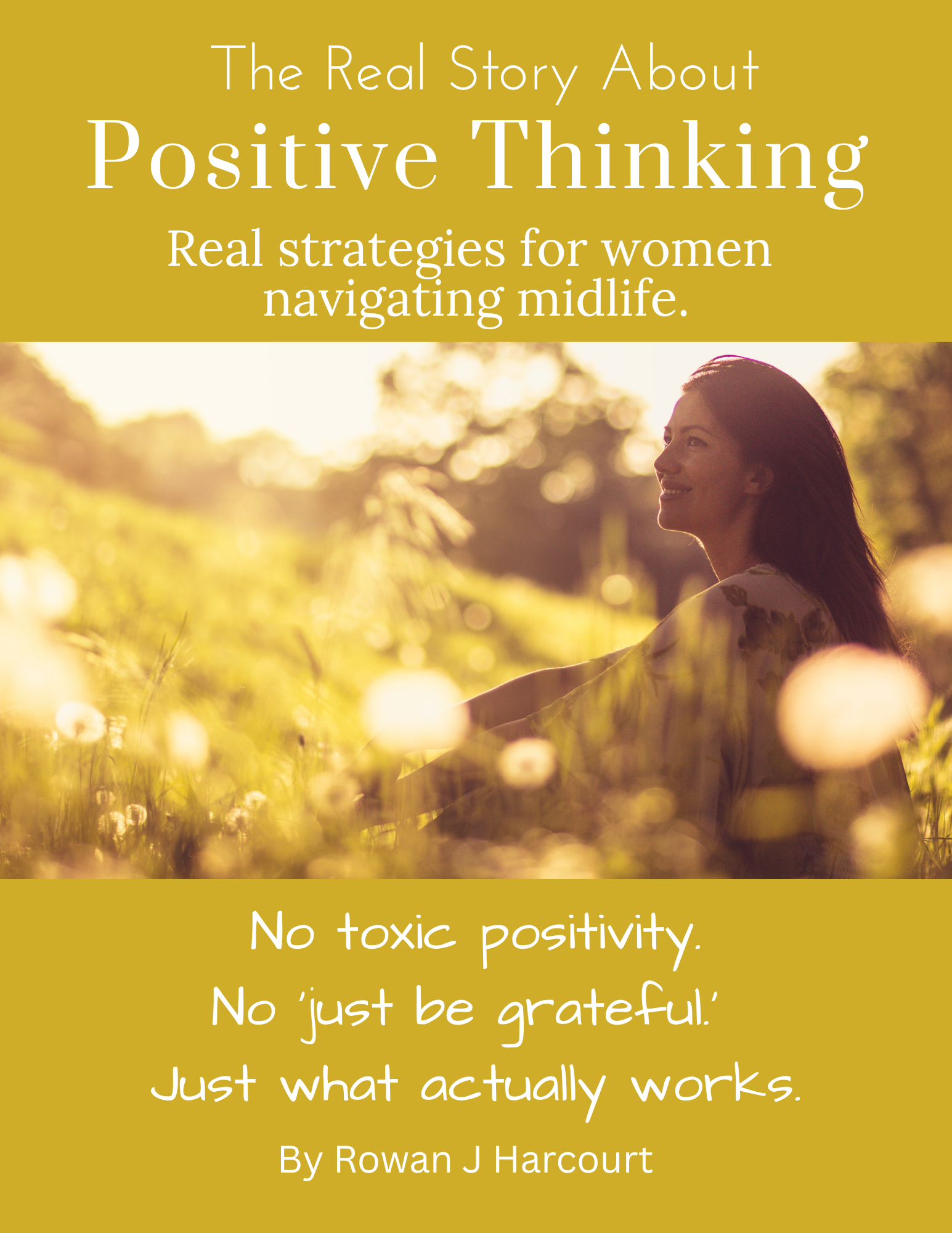
If this page has resonated with you, it may be because part of you is ready for a quieter, more supportive way of relating to yourself.
Many women in midlife are told to “just think positive”—as though decades of responsibility, change, and emotional weight can be brushed aside with a few affirmations. When that doesn’t work, it’s easy to feel as though you’re failing at something that was never designed for your reality in the first place.
That’s why I created this free guide especially for women at this stage of life.
The Real Story About Positive Thinking
This isn’t about forcing optimism or pretending everything is fine.
It’s about learning how positive thinking actually works when life is complex, responsibilities are real, and your identity is shifting.
Inside the guide, you’ll discover:
- Why most positive thinking advice falls short for women in midlife
- How to challenge the quiet “it’s too late” narrative many women carry
- Practical, realistic strategies for kinder self-talk—without guilt or pressure
- How to reframe empty nest, change, and loss as transition rather than failure
- The unexpected advantages you now have that younger women simply don’t
No fluff. No toxic positivity.
Just honest, steady guidance for women ready to rediscover themselves—at their own pace.
👉 To find out more and download your free guide - Positive Thinking for Women - Click Here...

Rowan J. Harcourt. Creating practical personal growth courses online for real people with real lives.
Blog - Mindfulness For Life Transitions